"Partisan" — the whole slate at 5, nobody else
Level: 101 · for voters
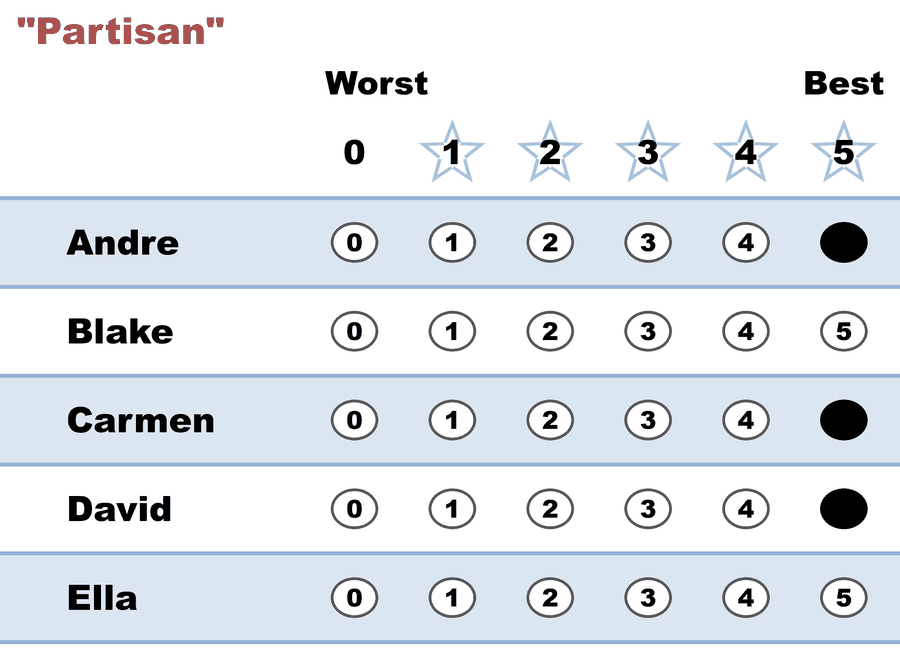
Every candidate on your side gets a 5; every other row stays blank. A party-line vote, written in stars.
← One of thirteen voting styles. Every style is legal and counted; this page is what this one means, when it fits, and what it trades away.
What this ballot says
"My side's three — Andre, Carmen, David — full support. Nobody else." Equal 5s are allowed and honest: this voter refuses to rank teammates against each other, and the blanks put everyone outside the slate at 0.
When it fits
- You support a team, not a person — a party slate, an endorsement list — and your genuine opinion is "any of mine over any of theirs."
- Group endorsements: an organization can recommend this exact ballot without asking members to split hairs among friends.
The trade-off, honestly
Two edges, both by your own choice. If the runoff is your slate versus outside — the fight this ballot was built for — your full vote lands on your candidate, every time. But if two of your own 5s become the finalists, your ballot is Equal Support: you said "no preference between them," so the choice among your teammates is made by voters who did express one. Same on the other side — two blanks in the final means you've no say at all. Equal scores are never discarded (they helped decide who made the final); they just decline the last question.
This exact style in a real election
In the runnable style-gallery election, the partisan row is 5,5,0,0,0,5 — a three-candidate slate. Two of the slate's own 5s (Bianca and Frank) became the finalists, so this ballot sat the runoff out as Equal Support — precisely the "teammates in the final" edge case above, caught live in a six-candidate race.
Related
- Anyone But… — the same all-or-nothing ballot pointed the other way
- STAR's Automatic Runoff — where Equal Support ballots land, exactly