Books on Voting Methods — a shelf, with honest labels
The How to Learn About Voting Methods reading path is threaded through this repo's runnable examples, and its "further reading" points mostly at websites, blogs, and videos. This shelf is the other half: the published books — the popular introductions you can hand a newcomer, and the scholarly volumes the whole field cites.
It's organized into four shelves by how you'd actually use them, not by method. A book is listed on one shelf (its best home) and cross-referenced from the others, so nothing drifts out of sync.
Reading fairly. Several of these authors advocate — for range voting, for approval, for majority judgment, for Condorcet methods, even (in one famous case) for the Borda count. That's not a flaw; it's the field. This repo is STAR-centered and says so, and it reads its own sources — including FairVote — critically, for the argument and not the conclusion. Every book below carries a one-line "the lean" so you know where the author is standing before you start. Read them that way.
The four shelves
📘 Popular introductions — start here, no math required
The books to read first, and the ones to lend. Narrative, example-driven, written for a general audience.
⭐ Rated & score methods — this repo's home turf
Approval, score/range, and majority judgment — the cardinal family STAR belongs to. Where the case for scoring-not-ranking is made in full.
🎓 Social choice theory — the impossibility results and the paradoxes
Arrow, Sen, Saari, and the rest: why no method is perfect, worked rigorously. Read these when the "no voting system is fair" objection comes up — they're where it comes from, stated precisely.

🗳️ Electoral systems & proportional representation — the comparative and civic view
Zoom out from single-winner: how whole systems compare, how seats get apportioned, and a citizen's guide to the trade-offs.
If you read only one
- Curious voter, no math: Gaming the Vote (Poundstone). A page-turner that lands on score voting — the closest popular book to this repo's outlook.
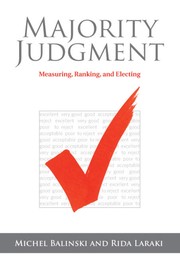
- You want the STAR family's intellectual roots: Approval Voting (Brams & Fishburn) and Majority Judgment (Balinski & Laraki).
- You keep hearing "no voting system is fair": Chaotic Elections! (Saari) for the intuition, Arrow for the proof.
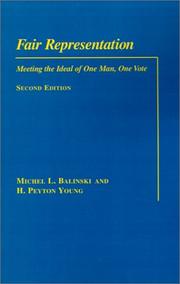
- You care about seats, not just single winners: Fair Representation (Balinski & Young) for apportionment, Patterns of Democracy (Lijphart) for whole systems compared.
- You want to know why "the center wins": The Theory of Committees and Elections (Black) — the median voter theorem, at the source.
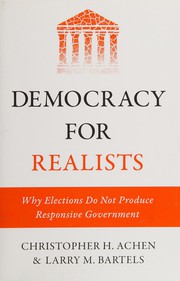
- You suspect reform won't change anything: Democracy for Realists (Achen & Bartels). The strongest argument against us on this shelf; read it before you promise too much.
About the covers
Cover thumbnails are from the Open Library covers API (community-maintained, freely reusable), shown small for identification in this annotated bibliography. Editions and cover art vary; the year given is the first edition unless noted. No endorsement by any author or publisher is implied.
Going deeper on one family
This shelf is organized for breadth. When you want the literature on a single family — books, journal papers, and the free online surveys together — see the method-specific reading lists:
- Condorcet methods — a reading list — with Fishburn's C1/C2/C3 taxonomy up front, because in this family the names are the hard part.
Beyond the shelf — the political-science neighbors
These two aren't voting-methods books, so they get no shelf entry — but they are the adjacent literature a reader of this shelf keeps bumping into, and naming them beats pretending the boundary is natural:
- James M. Buchanan & Gordon Tullock, The Calculus of Consent (1962) — the founding text of public choice: what majority rule actually costs, why unanimity is expensive, how logrolling works, and why the constitutional choice of decision rule matters more than any single vote cast under it. The lean: public-choice, skeptical of majoritarianism — the adversarial view worth having in the room. (Duncan Black, on the social choice shelf, is the other founder of this tradition.)
- David Estlund, Democratic Authority: A Philosophical Framework (2008) — the standard modern statement of epistemic democracy (his term: epistemic proceduralism) — that democracy's authority rests on its tendency to reach just outcomes at better than chance, not on fair procedure alone. Philosophy rather than method design, but the best answer to "why should the count be good, and not merely agreed to?". The lean: pro-deliberative, and notably arguing against epistocracy — rule by the knowledgeable — which is the natural rival of his own epistemic framing.
A fifth "epistemic / behavioral" shelf was considered and skipped: with The Wisdom of Crowds and Democracy for Realists sitting naturally among the popular introductions, it would have held two books, neither of them about a voting method.
Related
- How to Learn About Voting Methods — the runnable, example-first reading path (books complement it)
- Who's who in voting reform — many of these authors, profiled
- Glossary · Start Here · Curriculum